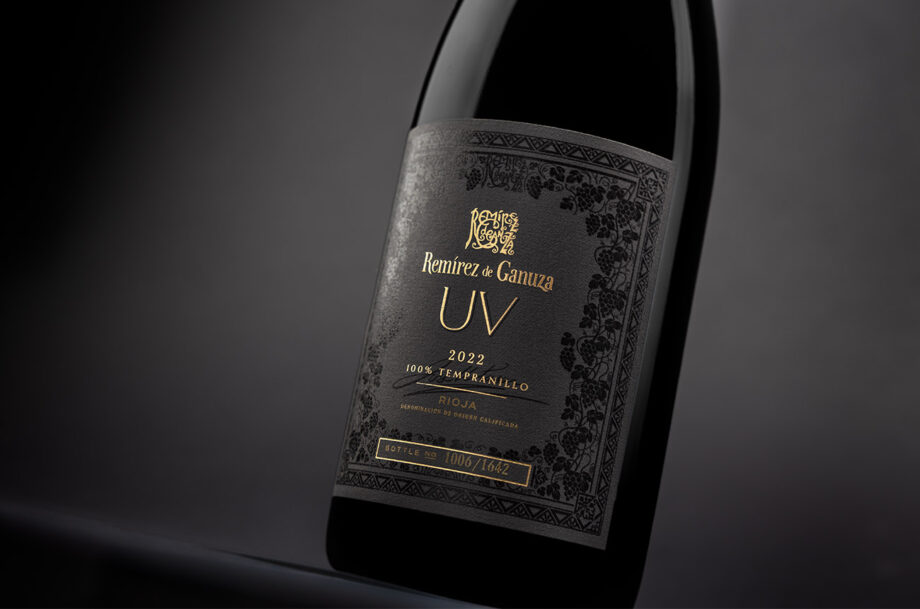
Jose Ramón Urtasun introduces the winery’s exciting single-varietal projects: Único Viñedo and Iraila (both soon to be certified organic) with grapes sourced from an exceptional plot of vines called La Rad. From experimentation in the winery to thoughts on the future of winemaking in Rioja, pour yourself a glass and read on.
The interview below has been edited and condensed for clarity.
Único Viñedo: A pure expression of Tempranillo
Produced only in very limited quantities, the current vintage of the Único Viñedo is 2022. This 100% Tempranillo sees 16 months in French oak barrique, with grapes sourced from the higher, fresher part of the vineyard. Expect vibrant notes of fragrant violets, crushed rose petals and crunchy red fruits: wild strawberry, red cherry, pomegranate and cranberries.
The Único Viñedo, Urtasun explains, ‘is the first time we produce a 100% Tempranillo. It’s from one vineyard located in San Vicente de la Sonsierra, located in the paraje of La Rad.
‘We have had these vineyards since 2007. For some years, these Tempranillo grapes formed part of the blend for the Remírez de Ganuza Reserva. It’s a very pure, very elegant Tempranillo; floral, delicate and precise. That’s why we wanted to make a specific wine from these grapes.
‘We hadn’t previously produced a 100% Tempranillo because we have always valued what Graciano brings to the blend: freshness and acidity. But this specific vineyard doesn’t need blending, because it’s already very, very fresh. Único Viñedo is low in alcohol at 13.5% abv, and has good acidity.
‘We initially used barrels from very old oak (approx 600 years) sourced from an old forest close to Burgundy. This oak is very respectful to the more delicate, floral, violet part of the Tempranillo. We have used larger format oak for the 2024 and 2025 vintages.
Do you plan to produce the Único Viñedo every year?
‘It is my wish to produce it every year, vintage allowing. We decided not to produce the 2023 (it went into the Remírez de Ganuza Reserva blend); but I believe the 2024 vintage is going to be the best one so far.
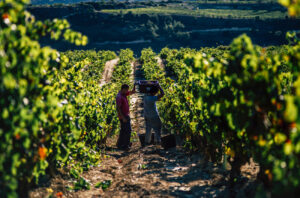
Harvest at Remírez de Ganuza. Credit: Image provided by the winery.
How are things changing in Rioja more generally?
‘Rioja is changing a lot. When founder Fernando Remírez de Ganuza made his changes, it was groundbreaking because at the time no one was doing anything that was breaking with tradition.
‘Nowadays, there’s a lot of things going on: Rioja is more adventurous, more diverse. We of course have wineries that are working in a very traditional way… but also very small growers that are producing in lots of different ways and experimenting. It’s a real change. If you go to Rioja and you go to a local wine bar, there’s so many different types of wines.
‘I think the region’s message for many years has not been the right one: pushing the name of Rioja, as if all wines produced here were the same. I think the new classification is still missing the point – and the point should always be quality.
‘There’s nothing wrong with mentioning how long the wine has been aged: Reserva, Gran Reserva, but I believe some other parameters are required: for example, the yield and quality of the grapes.
‘I think the DO should have certain rules, always with quality in mind. But then it should give more freedom when it comes to things that are really not important for quality – such as blending grapes sourced from vineyards in different villages.
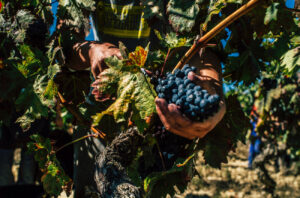
Harvest at Remírez de Ganuza. Credit: Image provided by the winery.
Introducing Iraila: 100% Garnacha
This limited production single-varietal wine offers notes of rose, wild strawberry and cherry with a hint of spice. The Iraila 2022 sees 11 months in a combination of amphora and French oak.
Urtasun explains, ‘We started producing this 100% Garnacha in 2020. It was the first time we produced a red that is not based on Tempranillo…It’s a very fresh Garnacha, from the northern part of San Vicente de la Sonsierra.
‘We have experimented with Italian amphora…it’s very reductive atmosphere…and is very respectful of the more floral and delicate parts of the wine. So we use that and two barrels previously used to produce white wine.
‘The name Iraila means September in Basque. I called it Iraila because the wine has a lot of red fruit, and that reminds me somehow of summertime. But then the wine is also very fresh, and I think September is like that – it’s the end of the summer. The grapes were also harvested in September, then the wine bottled the following September.
Eye-catching labels that tell a story
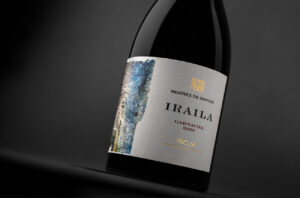
Credit: Image provided by the winery.
‘The Iraila label changes every year; it’s always a different photo, picture or drawing. The first vintage we produced has a label showing the sea at Biarritz with the Jaizkibel mountain in the background. I chose it because the colours in that photo remind me of September. The label was chosen by chance. I was having a meal in Biarritz with a couple of friends and the general manager of Volvo who told me his passion was photography. I asked to take a look and he showed me the photo that later became the label.
‘The label for the second vintage, the 2022, is a landscape photo by my friend and owner of Restaurante Sacha in Madrid. The 2021 is going to be designed by a Portuguese artist. Every year is going to be a little different: with small things like this, you can play around a little bit rather than labelling in the same way.
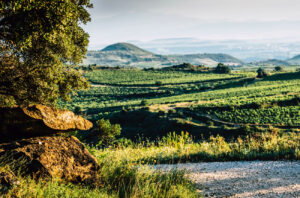
The Rioja region is ‘witnessing a vibrant moment’, Urtasun explains. Credit: Image provided by the winery.
A thirst for experimentation and staying true to the winery’s roots
‘We are constantly trying things. For example, we have been experimenting with glass fermentation vessels. There’s no exposure to oxygen, so it’s very pure fruit…It’s very good to learn from different materials, different ways of doing things.
‘I think it’s very important to look at the future from where we are and from who we are. It’s not only about selling more or selling at a higher price. It’s about who we are and our history.
The future for the region
‘I think the region is witnessing a very vibrant moment in terms of people trying new things. This has not been easy, because Rioja is very traditional.
‘At the same time, it is probably the worst moment in terms of sales: people are suffering a great deal. A lot of wines that are not meant to age that much are not being sold and then people are doing big discounts. This is very bad not only for the wine’s image, but for grape growers and the small winemakers… I think Rioja needs to sell the average wines at a higher price, because if not, it’s very difficult for some people to survive.
A fair price and a sense of social responsibility
‘This year Remírez de Ganuza decided to increase what we pay for the grapes that we buy. I believe it is the time to do it: in a difficult moment like this, we must stand by and pay more. We demand very high quality from our growers; if we are asking for higher quality than average, then we should pay higher.
‘Many times when we talk about sustainability and diversity it’s about the people, the villages, the different generations: winemaking is the most important industry in the area. We have to preserve that. Otherwise people are going to be forced to move to bigger cities, to do other jobs. If this happens we will all lose – because we will lose this way of living…We have a responsibility as a winery to support the local area and the local people.’
Related articles
Remírez de Ganuza – Mavericks of modern Rioja
Harvest 2024 at Remírez de Ganuza: precision, focus and selectivity
Remírez de Ganuza’s wines – The game changers
Discover more about Remírez de Ganuza wines
Connect on
Facebook | Instagram | Twitter