In some respects, vintage Champagne is an affront to the traditions of the Champagne region.
‘Champagne is a blended product,’ in the words of the Comité Champagne, the ruling body of the Champagne industry.
The region prides itself on the consistency of its wines, and the overwhelming majority of production are non-vintage blends – the Comité Champagne reports that vintage Champagne represented only 1.2% of exports in 2024. For seasoned wine lovers, however, this tiny sliver of the market can provide wines of spectacular quality.
It has long been held that vintage Champagne is produced only in exceptional years. Luckily for wine lovers, it has become more common in the modern era of global warming.
Making a great vintage
The best vintages unite ripe fruit and abundant extract with thrilling acidity and structure. In my book ‘Vintage Champagne: 1899 to 2019’, I awarded only three vintages a top, five-star rating since the turn of the millennium: 2002, 2008, and 2012.
All the factors came together nicely in 2012: ripe fruit (potential alcohol of 10.6% at harvest), crisp acidity (an average of 7.8 g/L), and very healthy fruit.
The year did not begin auspiciously, however. A spring frost that damaged 10–17% of the crop was followed by heavy rain that brought mildew and cool weather that disrupted flowering, all factors that limited the crop.
Fortunately, the rain stopped in mid-July, and conditions turned sunny and warm thereafter. The mid-August heatwave dried the grapes thoroughly, and harvest began on 10 September, producing a small crop of concentrated grapes with exceptional balance.
Results were superb throughout the region.
Chardonnay focus

Charles Curtis MW and Natalie Earl, Decanter’s France Editor. Picture credit: Ellen Richardson
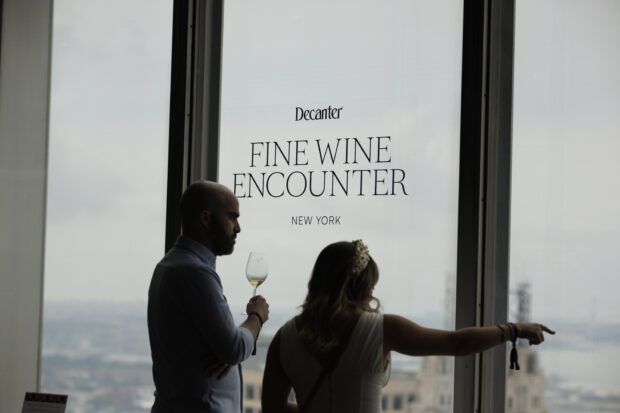
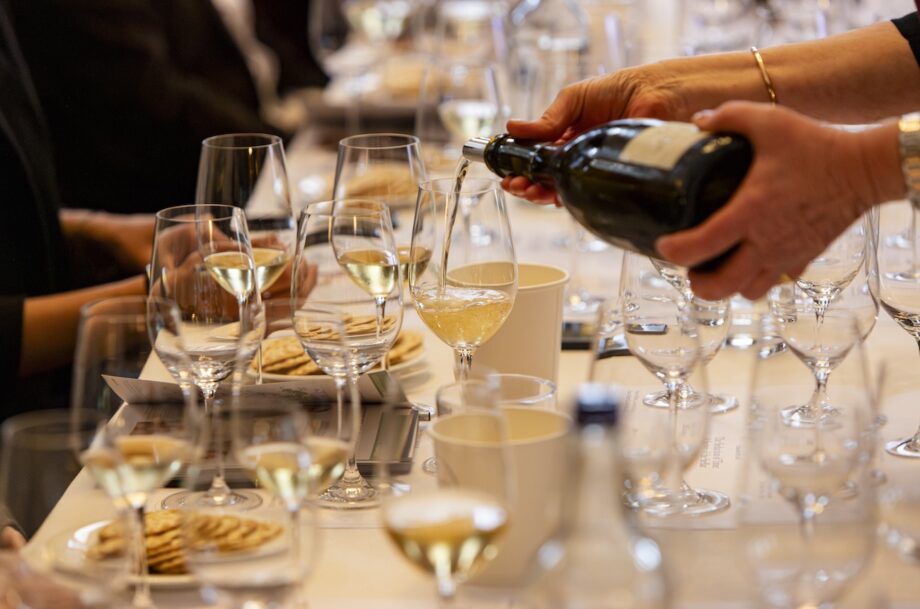
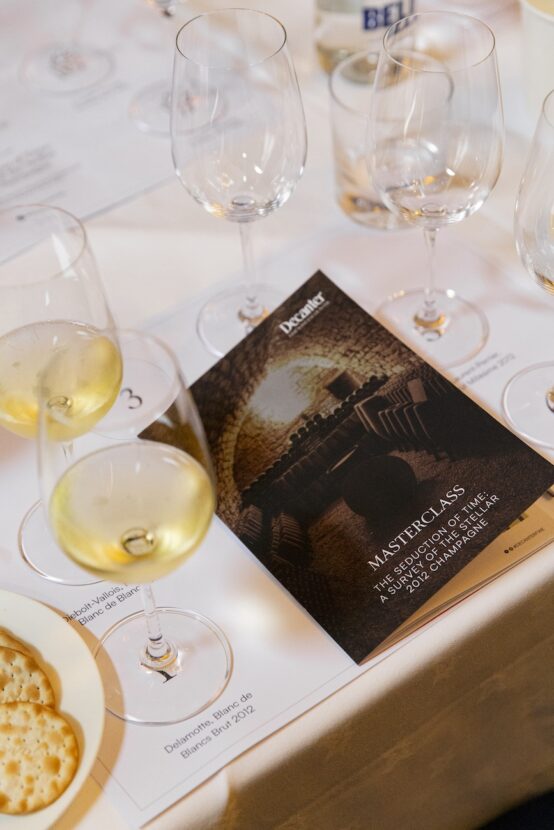
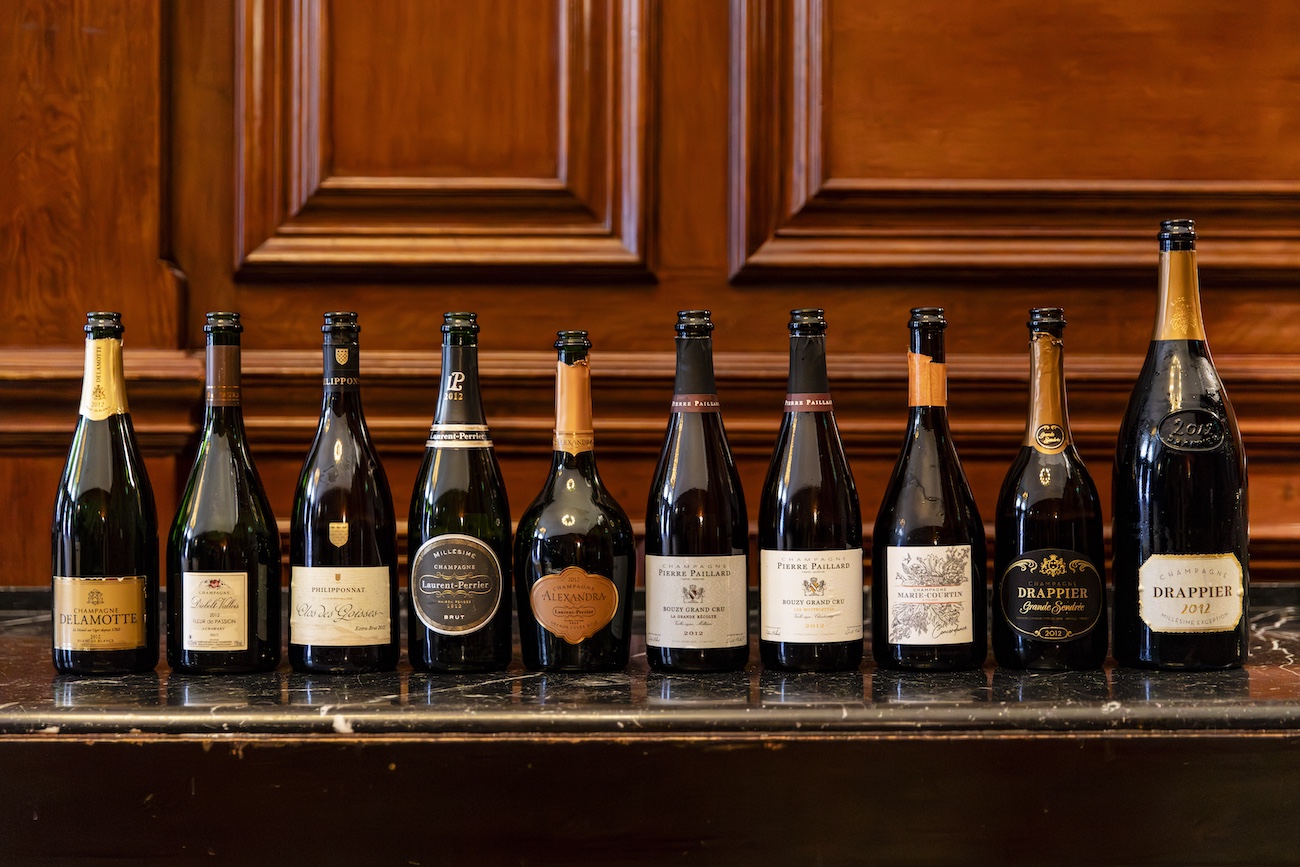
Tasters at the Decanter Masterclass sampled exquisite wines produced from across Champagne made by houses both large and small.
The tasting opened with two Blanc de Blancs Champagnes, made exclusively from Chardonnay. The first was produced by the venerable grande marque producer Delamotte.
The house style is clean and rich; the base wines are fermented in stainless steel, and all undergo malolactic conversion to soften the crisp acidity.
The 2012 was a blend of 20% each of the five grand crus of the Côte des Blancs: Le Mesnil-sur-Oger, Avize, Oger, Cramant, and Chouilly. The wine aged for nine years on its lees before being disgorged.
The second Champagne was the top-of-the-range Fleur de Passion from the small artisanal producer Diebolt-Vallois, who craft it from the grapes they grow on their family estate in the grand cru of Cramant.
Here, the base wines are all fermented in cask, and the malolactic conversion is not done, resulting in a zingy profile. This wine was also aged nine years before release, but the dosage with 3 g/L sugar was about half of that used by Delamotte, accentuating the wine’s crisp, refreshing nature.
A prestigious vineyard
From the Côte des Blancs, the tasting moved on to the Marne Valley and the incredibly famous Clos des Goisses from Champagne Philipponnat.
This exceptional wine is produced from a single steep vineyard in premier cru Mareuil-sur-Aÿ, whose vines are planted in thin, chalky soils that face due south and yield grapes of great concentration.
The 2012 was a blend of 61% Pinot Noir and 39% Chardonnay. Two-thirds of the base wines were fermented in small casks or larger oak uprights, and the rest in tank. Malolactic conversion was blocked, and the wine was given an extra-brut dosage of 4.5 g/L.
Picture credit: Ellen Richardson
A generous contribution
The next stop on the tour of the vintage was the Montagne de Reims, where Champagne Laurent Perrier and Champagne Pierre Paillard both generously provided two wines each.
Laurent Perrier, based in the grand cru Tours-sur-Marne, showed its vintage 2012, produced from equal parts Chardonnay and Pinot Noir from top villages throughout the region, aged for more than nine years before release.
The house also contributed its exceptional Alexandra rosé. This wine, a blend of 80% Pinot Noir and 20% Chardonnay, is made in the saignée (or maceration) method and aged for 10 years before release.
Pierre Paillard showed two wines, both from the grand cru village of Bouzy, where the house is based. La Grande Récolte is half Pinot Noir and half Chardonnay from its oldest vines, fermented in cask and aged for a decade before being finished with a dosage of 1 g/L.
Les Mottelettes is a rare bird, produced from Chardonnay from a single vineyard near the heart of the village of Bouzy, mostly known for its Pinot Noir. Co-planted with the Chardonnay is a small amount of Pinot Blanc.
The far south
Picture credit: Ellen Richardson
We finished our Champagne journey far to the south in the Côte des Bar. Concordance is the name of the flagship cuvée from Champagne Marie Courtin, where owner and winemaker Dominique Moreau is among the most gifted in the region.
This Champagne of extraordinary purity and freshness is truly a high-wire act, since she fashions it from a single parcel of biodynamically grown Pinot Noir vines, vinified in tank without the use of sulfur or any other additive during fermentation of the base wine.
The wine was disgorged for our tasting and received no dosage.
We concluded with two Champagnes from the outstanding firm of Drappier, established more than 200 years ago in cellars first constructed in 1152 by Bernard of Clairvaux.
Grande Sendrée is their blend of 55% Pinot Noir and 45% Chardonnay from an exceptional single-vineyard site. One-third of the grapes are fermented in cask and large oak uprights; the wine aged nine years on the lees before receiving a dosage of 4.5 g/L.
The last wine was Drappier’s Millésime Exception 2012, produced from parcels selected from throughout the region.
This diverse selection of Champagne amply demonstrated the thrilling quality and age-worthy character of the 2012 vintage, when lovely wines were produced by large and small wineries throughout Champagne.
The best of these wines will continue to improve for decades in the cellar, truly demonstrating the seduction of time.
Vintage Champagne 2012
Wines are listed in tasting order